
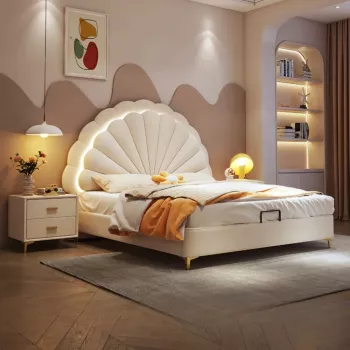
A corduroy-upholstered platform bed adds a soft, touchable finish while keeping the bedroom feeling tailored and uncluttered. In a queen size, the silhouette reads substantial without overwhelming the room—especially when it’s lifted by sturdy metal legs that keep the base visually light and easy to clean around. If you’re upgrading from a basic frame (or replacing a bulky box spring setup), a corduroy platform design can deliver the “finished” look of an upholstered bed while staying practical for everyday living. For more guidance, see How to Choose the Perfect Pet Bed for Your Dog’s Sleeping Style.
Corduroy is having a moment, but it’s not just trend-driven. The ribbed texture softens hard lines in modern spaces, echoes retro influences nicely, and brings warmth to minimalist rooms that need a little depth. A platform profile also keeps the setup streamlined, so the bed feels grounded rather than towering—helpful for bedrooms where you want the furniture to feel calm and proportional. For further reading, see Best Dog Beds – Consumer Reports.
For a cohesive bedroom look, start with the centerpiece: Chic Queen Size Corduroy Platform Bed with Sturdy Metal Legs. Then keep surrounding pieces simple so the fabric texture stays intentional rather than busy.
Even a “clean-lined” platform bed still needs breathing room. Before committing to any queen frame, map the walkway and door swings so daily routines—making the bed, carrying laundry, opening drawers—stay comfortable. A platform profile often looks best with nightstands that don’t tower over the mattress, which helps the whole arrangement feel balanced.
| Planning item | Why it matters | Practical tip |
|---|---|---|
| Side clearance | Makes daily movement and linen changes easier | Aim for comfortable walk space on both sides when possible |
| Foot clearance | Prevents a cramped feel at the end of the bed | Leave room for a bench or hamper if desired |
| Nightstand height | Improves reach and visual balance | Top surface should sit near mattress height |
| Rug sizing | Defines the bed area and adds warmth | Choose a rug wide enough to extend beyond the sides of the bed |
A platform bed is designed to carry your mattress with a supportive base structure (often slats or a solid platform system), which can eliminate the need for a box spring and keep the bedline crisp. Metal legs are more than a style choice: a well-built set helps distribute weight and reduce sway, especially important for a queen size used every night.
For a deeper overview of how different bases support mattresses, the Sleep Foundation’s guide to mattress foundations and bed bases is a helpful reference.
Comfort is also influenced by the bedroom environment—light, noise, and temperature all play a role. The Better Sleep Council’s bedroom environment tips can help fine-tune the space once the new bed is in place.
If the bedroom doubles as a media space, a streamlined console can keep the room feeling calm and coordinated with the bed’s tailored vibe. Consider the Scandinavian-Style Retro Wooden TV Stand for a cohesive, design-forward pairing.
For households furnishing multiple rooms, coordinating styles can help the home feel intentional. A space-saving option for shared rooms is the Stylish Twin Over Twin Bunk Bed, while the queen platform bed anchors primary and guest suites with a softer, elevated look.
Many platform beds are designed to support a mattress directly, so a box spring is often unnecessary. Check the bed’s slat or base system and confirm your mattress warranty requirements to ensure proper support.
Vacuum regularly with an upholstery attachment to remove dust from the channels, then spot-clean by blotting (not rubbing) any spills. Test cleaners in an inconspicuous area first and avoid over-wetting the fabric to protect its texture.
They can if the legs shift or if there’s grit trapped underneath. Use felt pads or floor protectors, make sure all legs sit level, and recheck the pads periodically so they don’t compress or slide.










Leave a comment