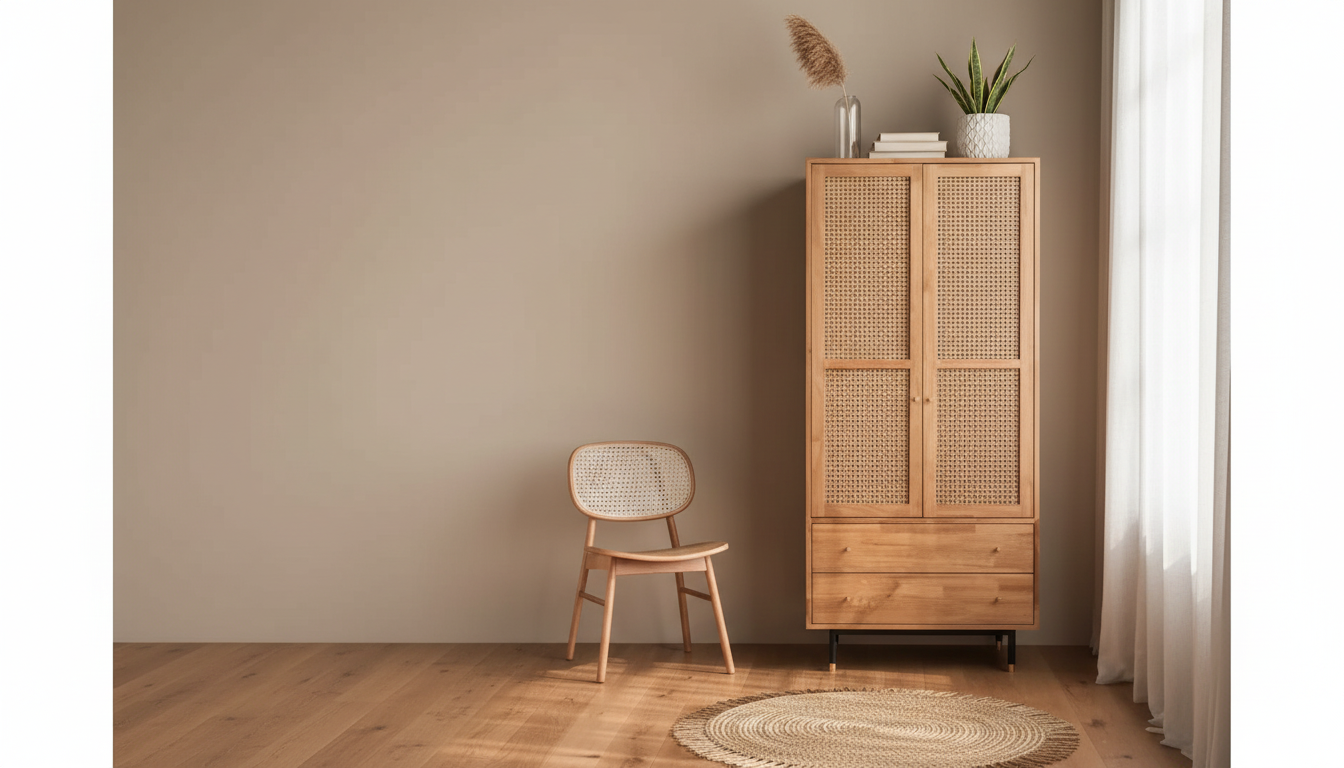
This oak wardrobe pairs a calm Japanese-inspired look with practical swing-door access for everyday clothing and linen storage. Its warm wood tone and clean proportions suit minimalist, Scandinavian, and modern natural interiors while keeping visual clutter to a minimum.
For a closed-door solution that helps a room feel more settled (without adding visual weight), see the Elegant Oak Wood Wardrobe – Japanese Style Swing Door Storage Cabinet.
Japanese-influenced interiors often feel restful because they prioritize balance, restraint, and clear sightlines. This wardrobe fits that mood through proportion and simplicity rather than ornate detailing.
To reinforce that calm, place the wardrobe near other “low-noise” elements: a simple rug, matte hardware, and a single statement lamp instead of multiple competing decor pieces.
Oak is a long-loved furniture wood because it performs well under daily use while keeping a natural, grounded look. As a hardwood, it’s well-suited for repeated open-and-close motion, especially on larger doors where stability matters.
For more background on how wood behaves over time, see the USDA Forest Service Wood Handbook. If sustainable sourcing is a priority, the Forest Stewardship Council (FSC) explains certification and chain-of-custody standards. For practical species notes, reference The Wood Database’s oak overview.
| Care focus | What to do | Why it helps |
|---|---|---|
| Humidity control | Keep rooms around 35–55% humidity when possible | Reduces seasonal movement that can stress doors and panels |
| Sun exposure | Avoid direct sun on one side for long periods | Prevents uneven color change over time |
| Cleaning | Dust with a soft dry cloth; spot-clean with barely damp cloth, then dry | Protects the finish and reduces moisture risk |
| Hardware upkeep | Check hinges and handles periodically; tighten if needed | Maintains smooth swing-door alignment |
| Floor protection | Use felt pads or a rug if on delicate flooring | Prevents scuffs and makes repositioning safer |
Swing doors feel traditional because they’re straightforward: open wide, see everything, reach what you need, and close the room back into calm. They’re especially satisfying for folded stacks, bins, or a mix of hanging and shelf storage.
When planning placement, measure not only the wardrobe footprint but also the “swing arc” of each door. If the cabinet sits near a bed, ensure the door won’t bump a nightstand corner or block a main walkway during morning routines.
Closed storage shines when it supports daily habits: quick put-away, fewer exposed piles, and less visual “buzz.” This wardrobe can act as a dedicated zone for categories that otherwise end up on chairs or open shelves.
A simple approach that stays consistent: top shelves for “rarely used,” middle shelves for “weekly,” and an easy-reach zone for “daily.” Add labeled bins inside for small items (belts, scarves, tech cables) so the exterior remains serene even if your life is busy.
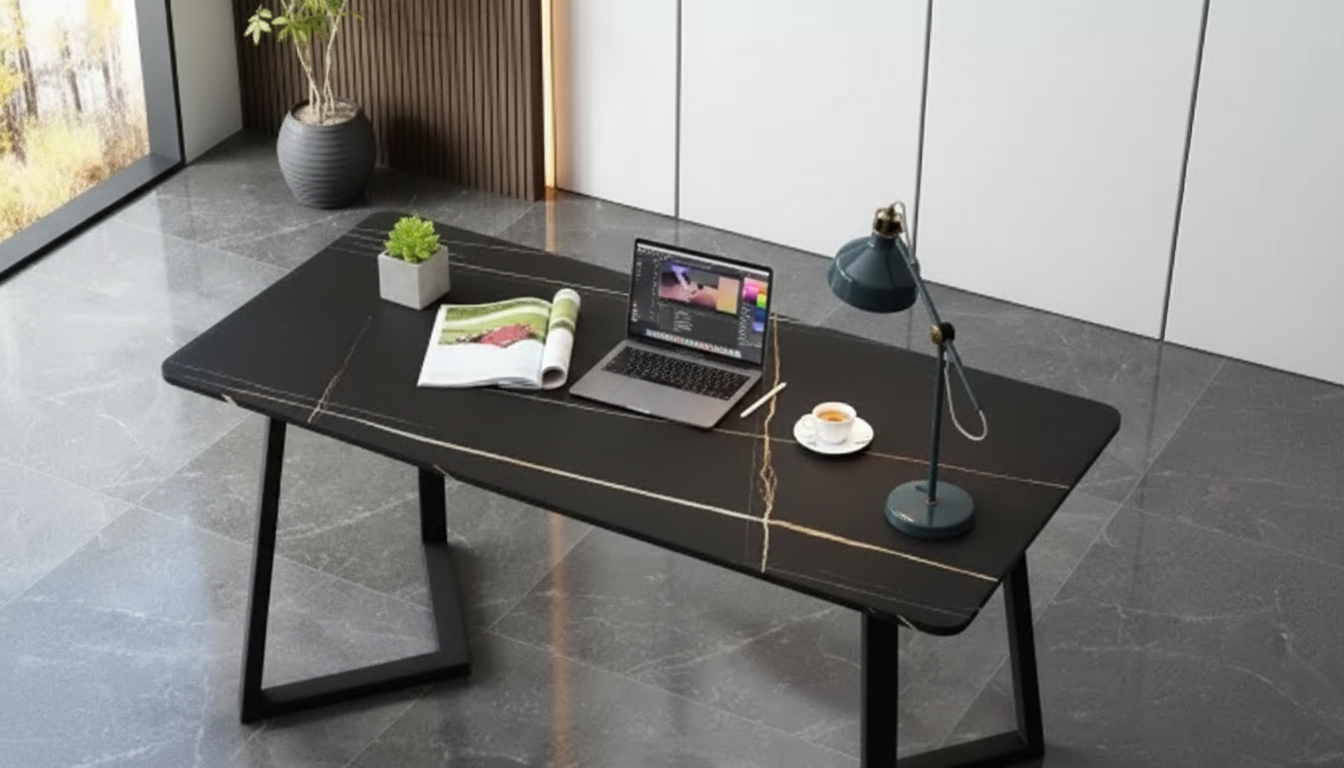
If you’re building a cohesive corner, consider balancing the wardrobe’s wood tone with a contrasting work surface nearby—like the Cinnamon Cherry Finish Computer Desk with Storage—while keeping hardware finishes consistent (all matte black, or all brushed metal).
| Room | Pairing idea | Product suggestion |
|---|---|---|
| Living room | Match warm wood tones and clean lines for visual continuity | Scandinavian-Style Retro Wooden TV Stand |
| Home office | Add a compact work surface with storage to keep the room uncluttered | Cinnamon Cherry Finish Computer Desk with Storage |
| Kids or guest space | Use vertical sleeping solutions to free up floor area for storage furniture | Stylish Twin Over Twin Bunk Bed |
Leave enough space in front of the wardrobe for the doors to open fully without hitting a bed, nightstand, or main walkway. Measure the door swing arc and compare it to nearby furniture depth to confirm comfortable daily access.
Dust with a soft, dry cloth and use only minimal moisture for spot cleaning, drying immediately afterward. Avoid harsh cleaners, keep indoor humidity relatively stable, and limit strong direct sunlight for more even aging.
Swing doors typically offer wider, clearer access and simpler hardware, which can be convenient for everyday use. Sliding doors save front clearance but usually limit full access to both sides at the same time.








Leave a comment