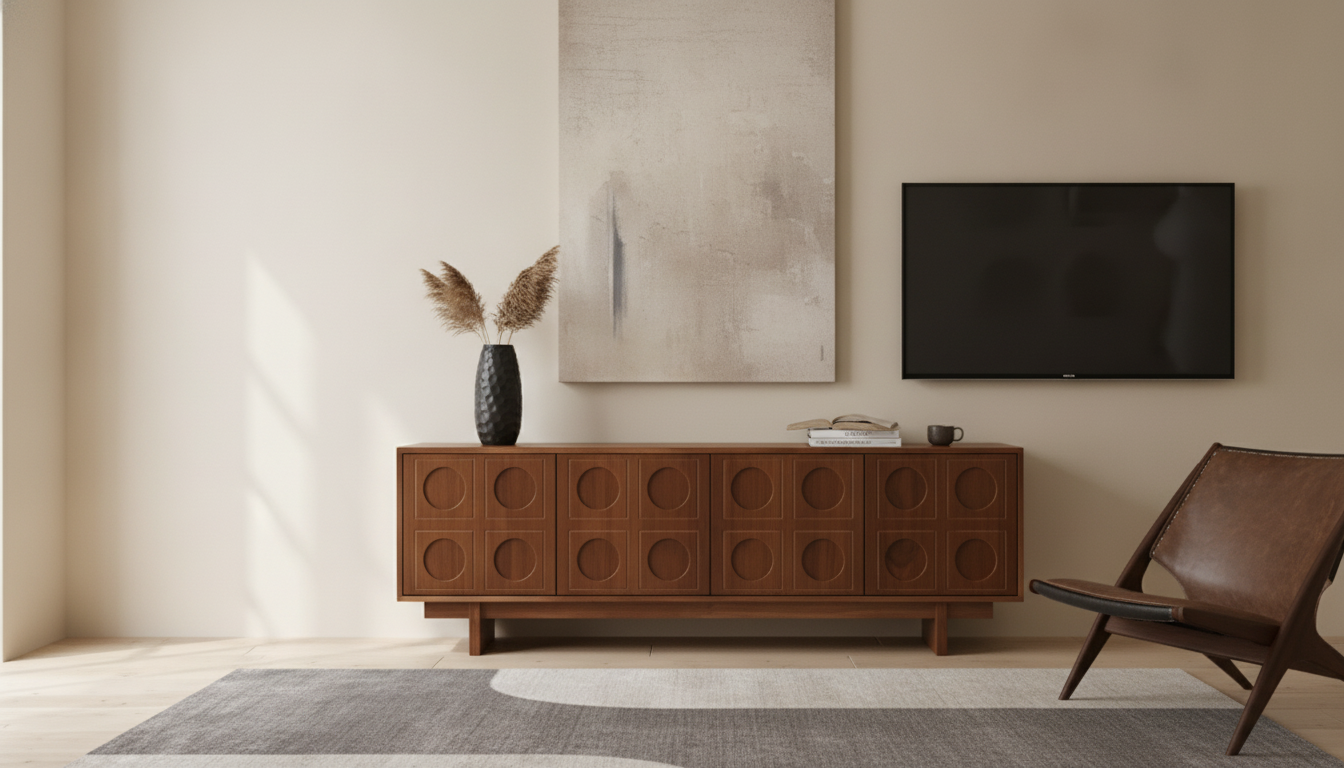
A Scandinavian-style retro wooden TV stand brings together clean lines, warm wood tones, and practical storage for a calm, curated living room. The best setups feel intentional: the TV is visually “anchored,” cables are controlled, and everyday gear is easy to reach without turning the top surface into a landing pad. With a little planning, this style supports modern screens, soundbars, and streaming devices while keeping the room light and open.
This look succeeds because it balances warmth and restraint. A lower profile and long horizontal lines keep the media zone grounded, while negative space (open legs, slim silhouettes) helps the room feel airy rather than crowded.
For a focused centerpiece, consider the Scandinavian-Style Retro Wooden TV Stand, which fits the style’s “less but better” approach—clean geometry, warm wood character, and practical storage potential.
A TV stand earns its keep in the daily routine: turning on a console, charging accessories, swapping an HDMI cable, or hiding the things that make a room look busy. Before choosing a layout, list what must disappear and what can be displayed.
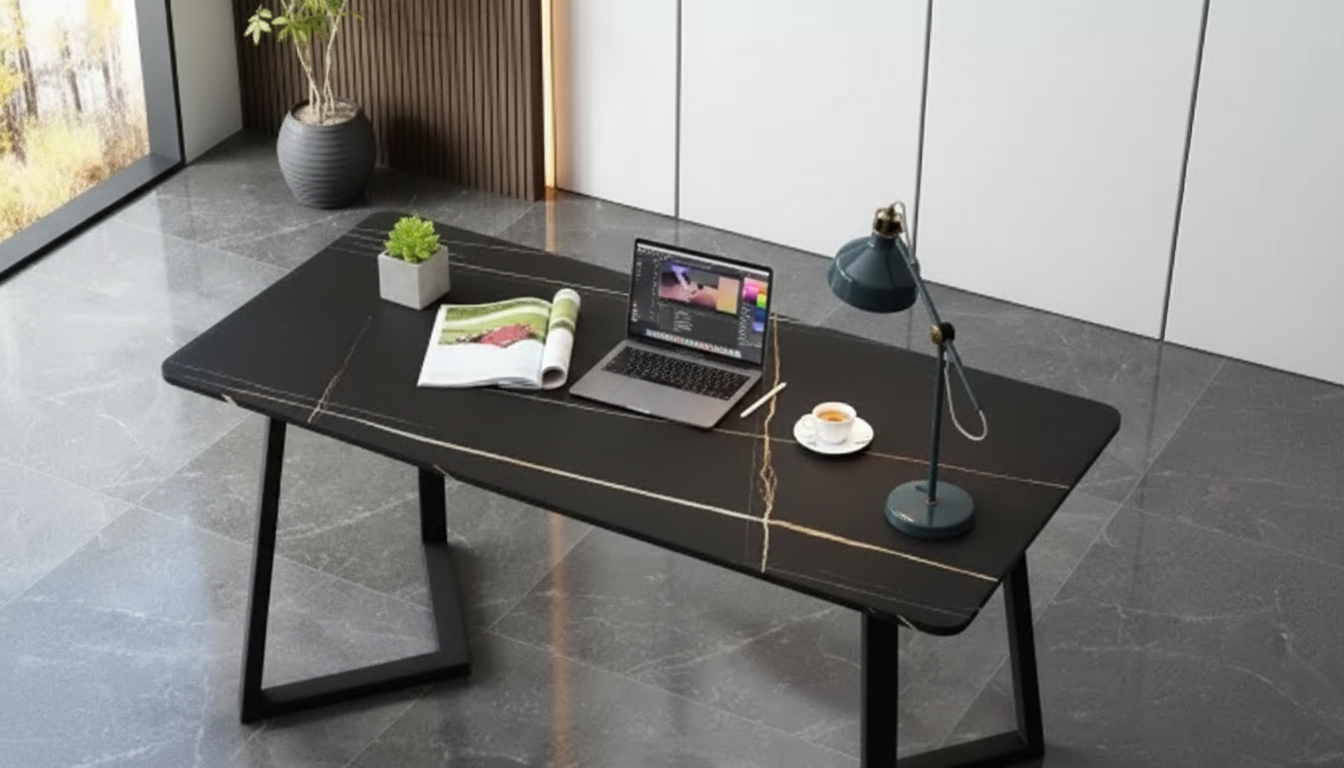
If your living room also doubles as a work zone, coordinating nearby pieces helps the space feel cohesive. A compact option like the Cinnamon Cherry Finish Computer Desk with Storage can complement warm wood tones while keeping small items organized.
Scandinavian retro style looks effortless, but it’s usually the result of good spacing. The stand should visually anchor the screen, doors and drawers should open without obstruction, and the setup should support comfortable viewing.
For guidance on viewing distance and comfort, RTINGS maintains a practical size-and-distance reference here: TV size to distance relationship.
| Decision | What to Measure or Confirm | Why It Matters |
|---|---|---|
| TV and stand width relationship | TV width vs. stand width | Prevents a top-heavy look and improves visual balance |
| Depth for devices | Soundbar depth + TV feet depth + cable clearance | Avoids overhang and awkward cable bends |
| Door/drawer swing | Clearance to walls and adjacent furniture | Keeps storage usable day to day |
| Ventilation | Air gaps around consoles/receivers | Reduces heat buildup and performance issues |
| Cable routing | Power outlet location and cable path | Supports a clean, safe setup |
For shoppers who prioritize responsible sourcing, it can also be useful to learn what wood certification labels indicate. The Forest Stewardship Council explains the basics here: About FSC Certification.
If you want extra closed storage elsewhere in the room (for linens, games, or media accessories), a streamlined piece like the Modern Faux Leather 6-Drawer Dresser with Cabinet for Bedroom & Living Room can help keep surfaces clear while supporting a polished, coordinated look.
A good rule of thumb is to choose a stand that’s slightly wider than the TV, which looks more balanced and less top-heavy. Extra width also helps accommodate a soundbar and keeps decor from feeling cramped.
Yes, as long as the stand’s weight capacity meets or exceeds your TV’s weight and the base/legs feel stable on a level floor. For added safety, consider anchoring the TV or wall-mounting it when appropriate.
Use cable clips or channels along the back, keep power bricks spaced apart, and leave slack so devices can slide out without tugging cords. Avoid tightly packing closed compartments; rear cutouts and air gaps help electronics vent heat.









Leave a comment